
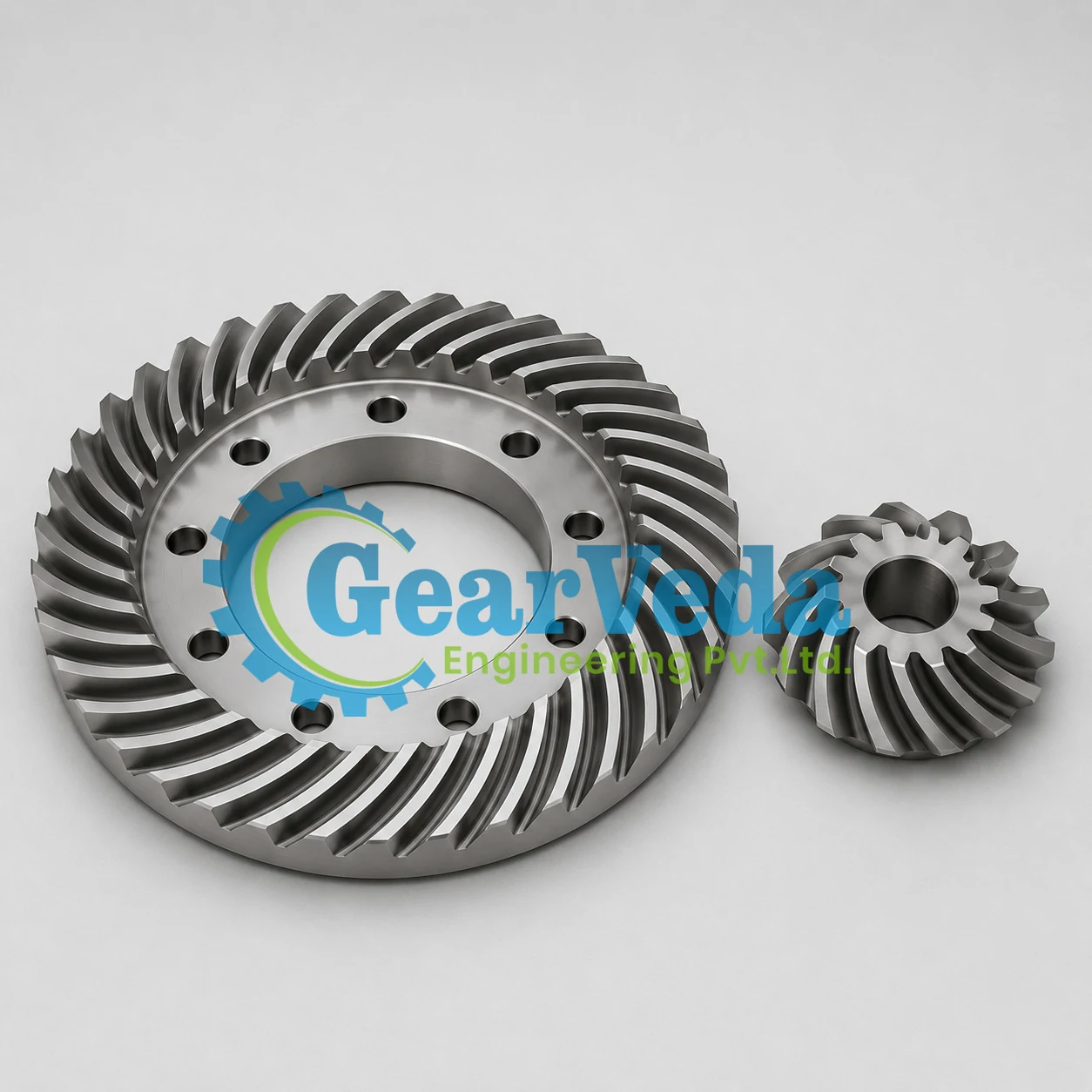
Home/Products/Hardened Spiral Bevel Gear
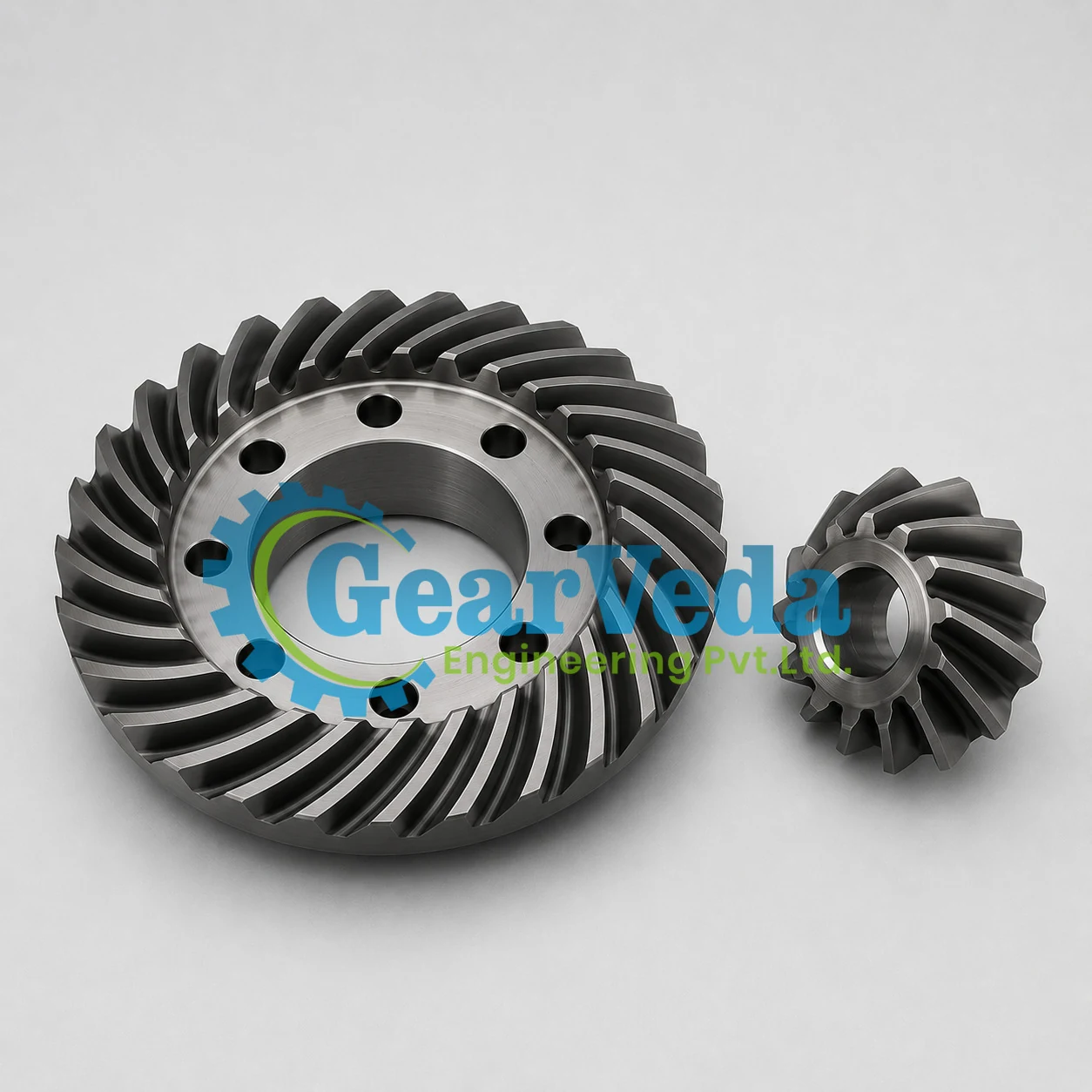
Hardened Spiral Bevel Gear
Case-Hardened Spiral Bevel Gears with a Hard Wear-Resistant Tooth Surface and a Tough Core, for Heavy and Shock-Loaded Drives.
| Gear Type | Spiral bevel, shaft angle 90° unless the drawing says otherwise |
|---|---|
| Made To | Customer drawing, CAD model or worn sample |
| Supplied As | Matched gear and pinion set, or single gear on request |
| Inspection Record | Dimensions, hardness and tooth contact on request |
| Surface Hardness | Commonly 58 to 62 HRC on carburised teeth |
| Processes | Carburising, through hardening, induction hardening, nitriding |
A Hard Surface on a Tough Core
Gear teeth fail in two ways: the surface wears or pits, or the tooth breaks at the root. A hardened spiral bevel gear is made to resist both. Case hardening, usually by carburising, makes the outer layer of the tooth very hard while the core stays tougher, so the surface resists wear and the body can absorb shock.
Processes We Use
Carburising and hardening of case-hardening steels is the standard route for heavy drives. Through hardening and tempering suits medium-duty gears cut from steels such as EN19 and EN24. Induction hardening is used where only the tooth surface needs hardening, and nitriding where very low distortion matters. We choose the process with the steel, the module and the duty in mind.
Case Depth and Hardness
Typical surface hardness for carburised teeth is in the range of 58 to 62 HRC. The case depth grows with the module, because a larger tooth carries more load deeper below the surface. Both are written on the drawing or agreed with you at quotation.
Checks Before Dispatch
Hardness is tested on the finished gear, and the tooth contact is checked against the mating pinion. Case depth can be verified on a test piece cut from the same lot.
See alloy steel spiral bevel gears for the steels we use and the material selection guide.
Frequently Asked Questions
Which hardening process is best?
For heavy and shock-loaded drives, carburising and hardening of a case-hardening steel is the usual choice. For lighter duty, through hardening is simpler and cheaper. We recommend the process from your torque, speed and size.
Can stainless steel gears be hardened?
Only the martensitic grades, such as SS410 and SS420, can be hardened. SS304 and SS316 cannot be hardened by heat treatment, so they are used where corrosion resistance matters more than load capacity.
Will hardening change the gear size?
Slightly. That is why we leave finishing stock and finish by lapping or grinding after heat treatment.
Related Products
-
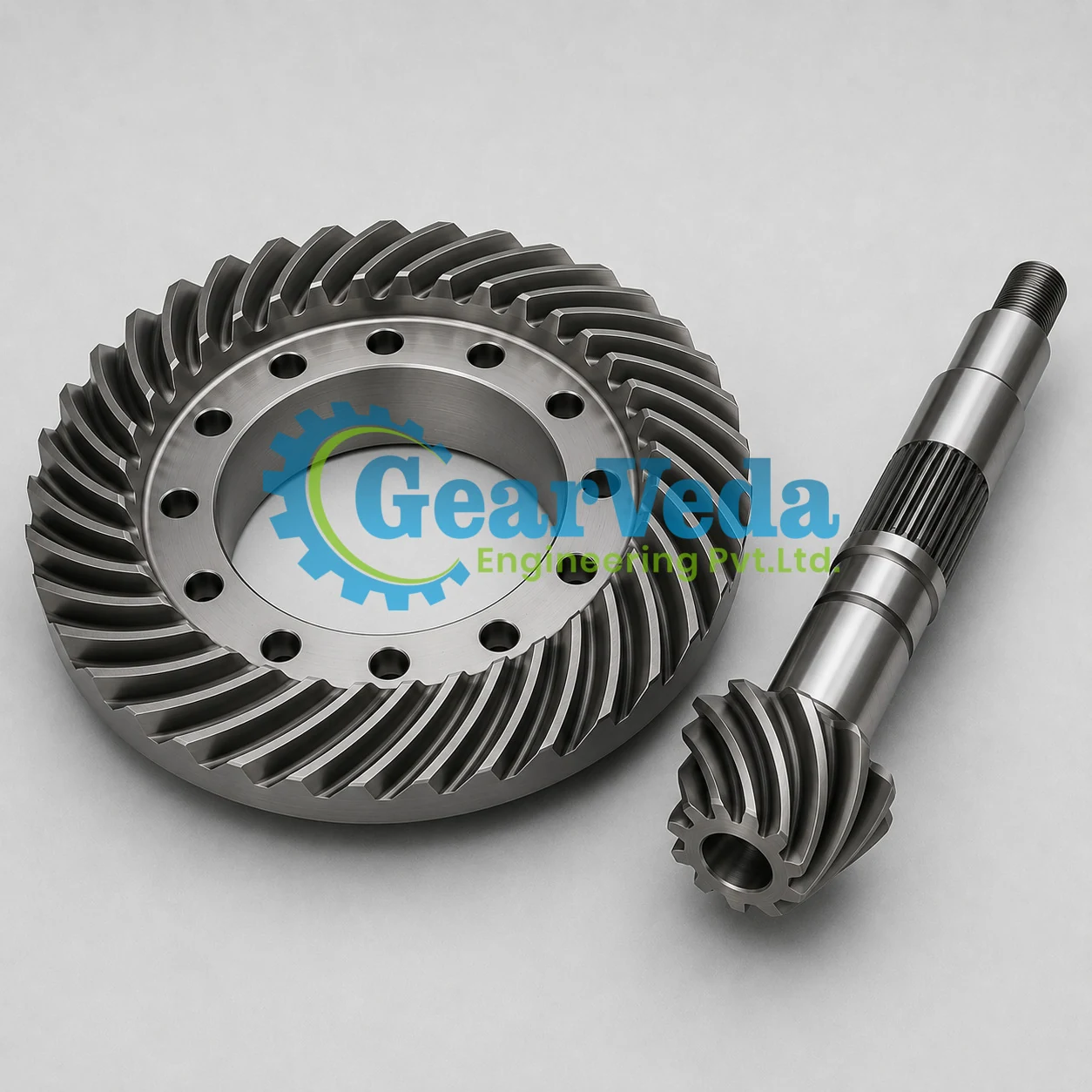
Spiral Bevel Gear
Spiral Bevel Gears and Pinions for Smooth, Quiet Right-Angle Power Transmission, Made as Matched Sets to Your Drawing or Sample.
View details -
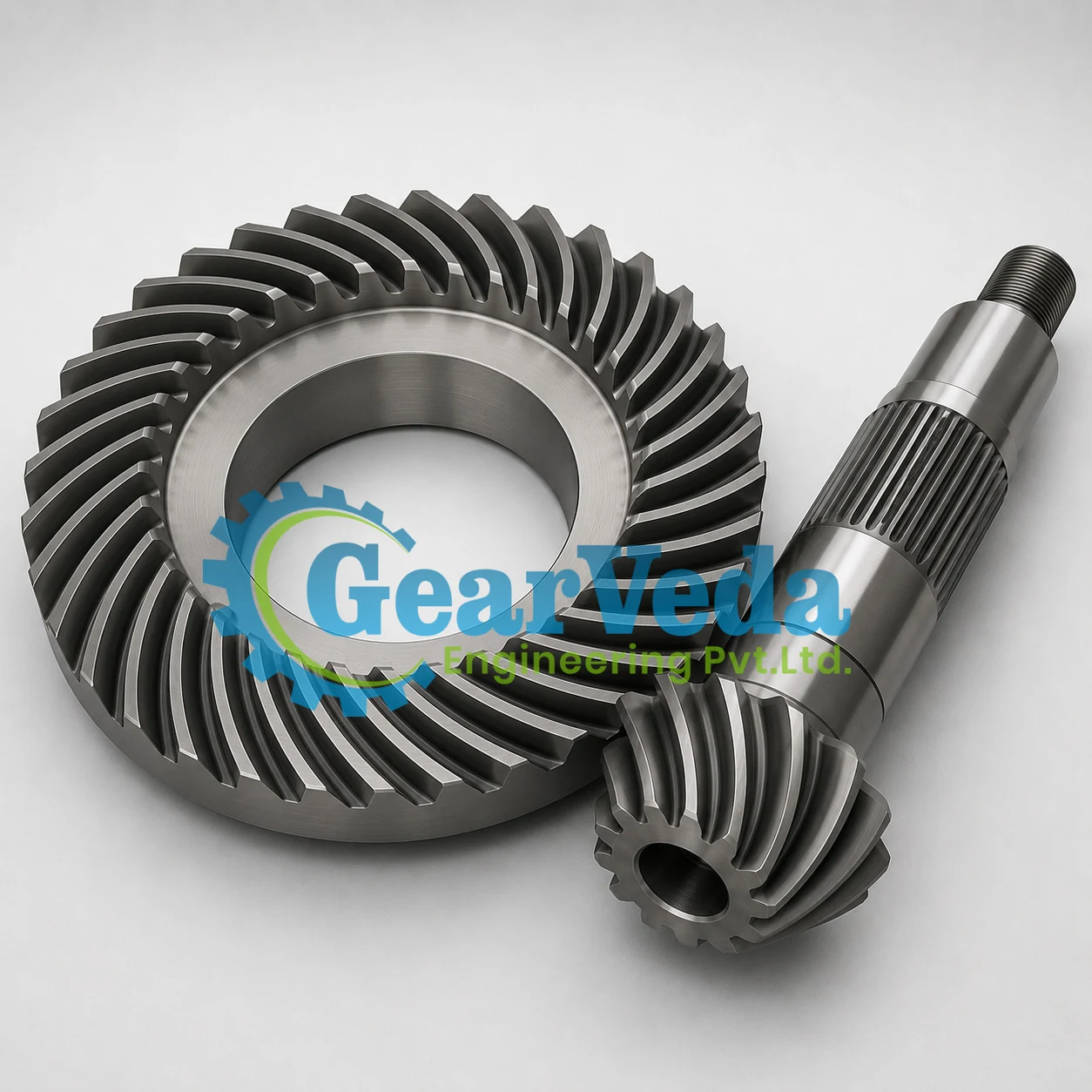
Ground Spiral Bevel Gear
Ground Spiral Bevel Gears for High Speed and Low Noise, Finished After Hardening to Restore Accuracy and Tooth Contact.
View details -
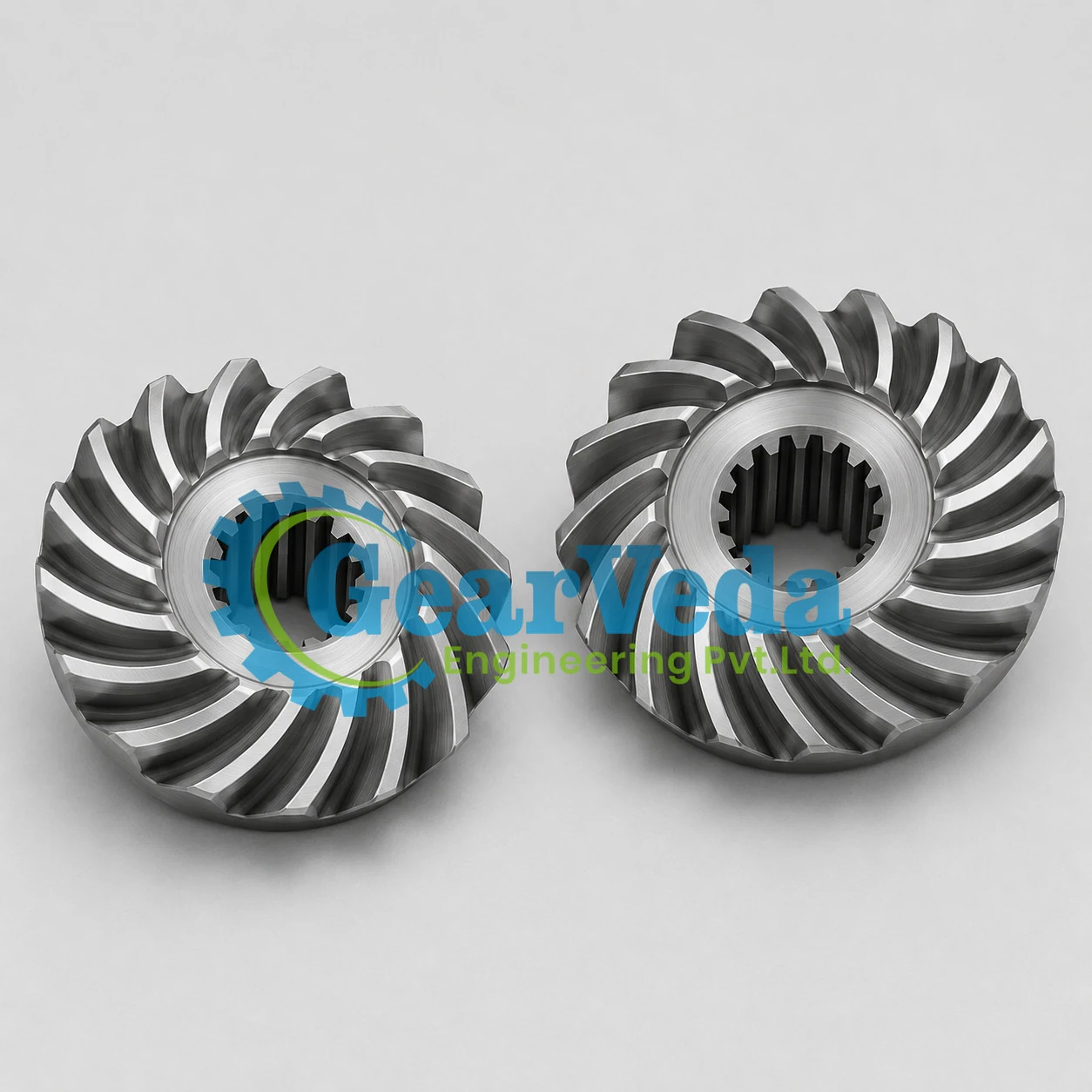
Custom Spiral Bevel Gear
Custom Spiral Bevel Gears Made to Your Drawing, Sample or Duty Data, for New Machines and for Replacing Parts That Are No Longer Available.
View details -
Alloy Steel Spiral Bevel Gear
Alloy Steel Spiral Bevel Gears for High Torque and Shock Loads, Cut from Forged Blanks and Heat Treated for Strength and Wear Life.
View details
Request a Quote for Hardened Spiral Bevel Gear
Share your drawing, sample details, quantity and delivery location. Our engineering team will review it and reply.