1. Drawing and Material
The process starts with the drawing, or with measurements taken from a worn sample, and the choice of steel. The steel decides how the gear can be hardened and how much load it can carry.
2. Blanks
Blanks are forged for larger or heavily loaded gears, or cut from bar for smaller ones. Forging aligns the grain with the shape of the gear and improves fatigue strength.
3. Turning
The blank is turned to size, with the bore, hub and faces finished and a margin left on the places that will be ground later.
4. Cutting the Teeth
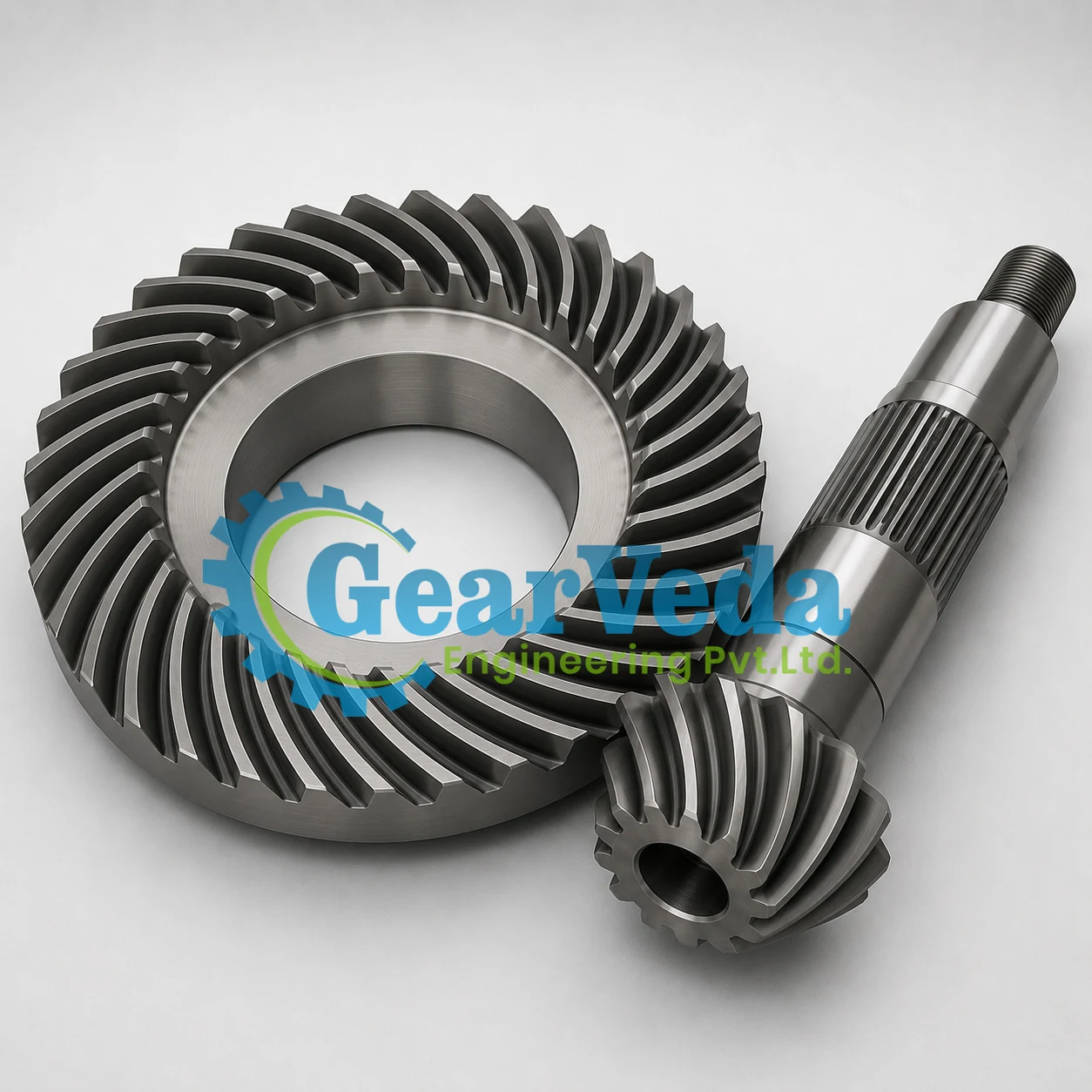
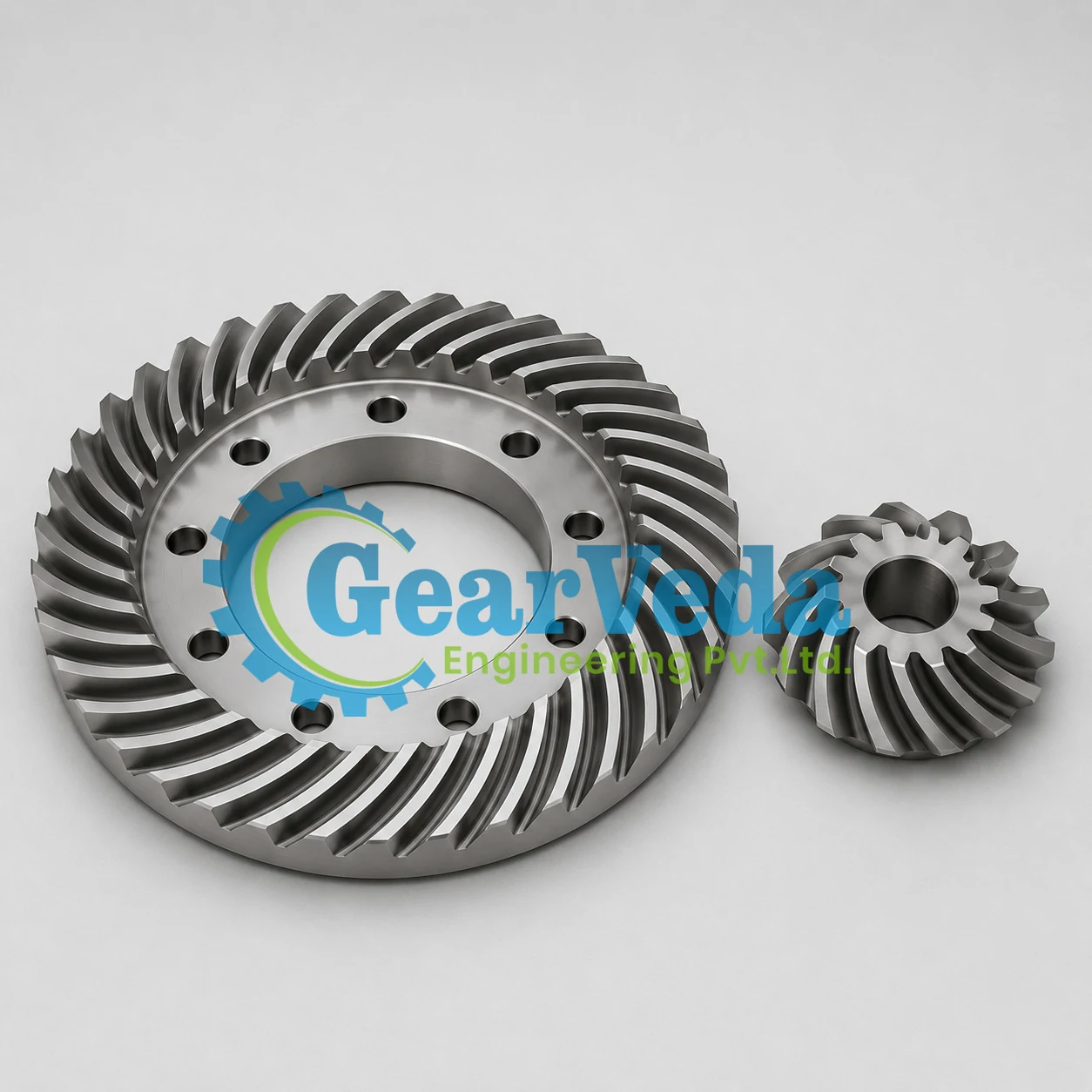
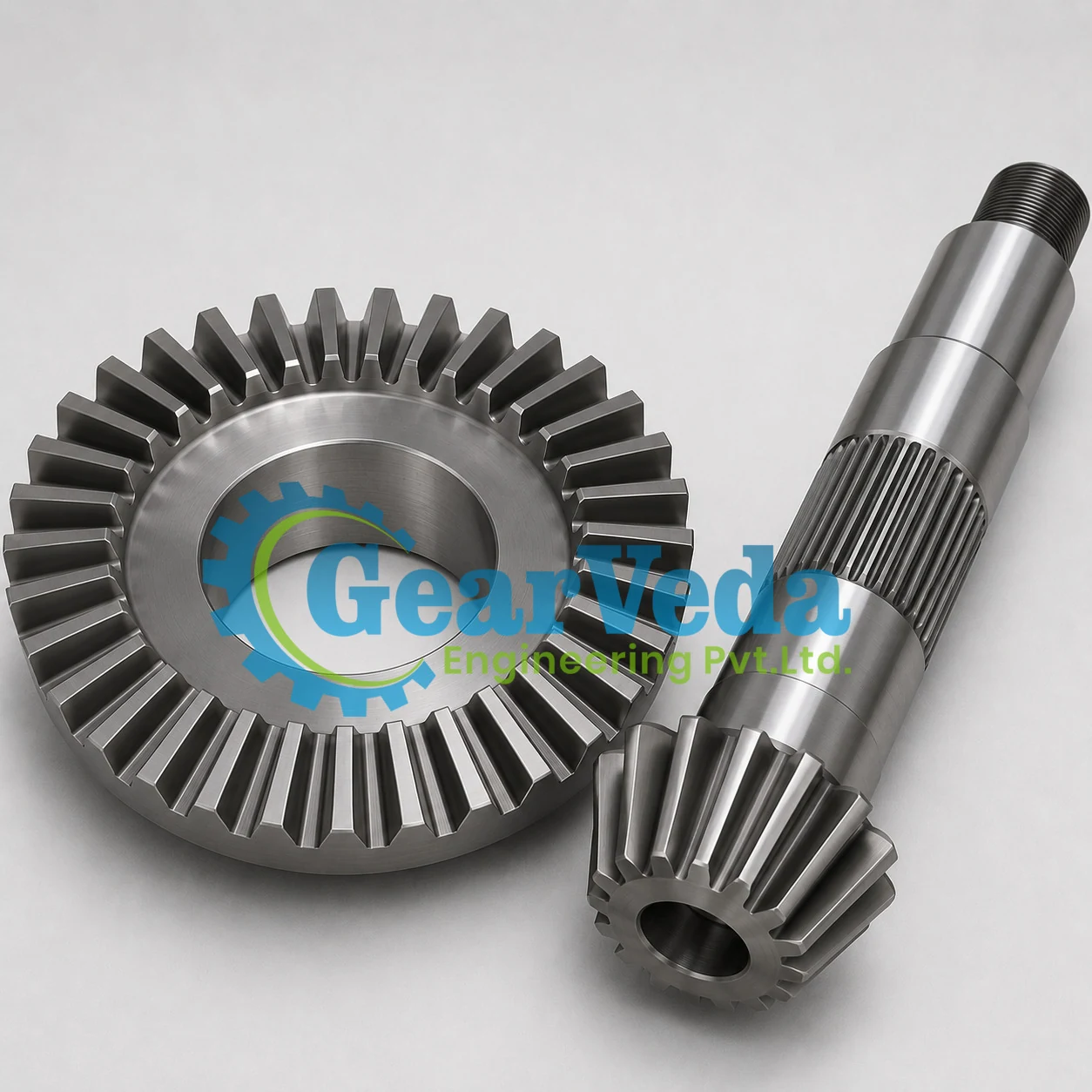
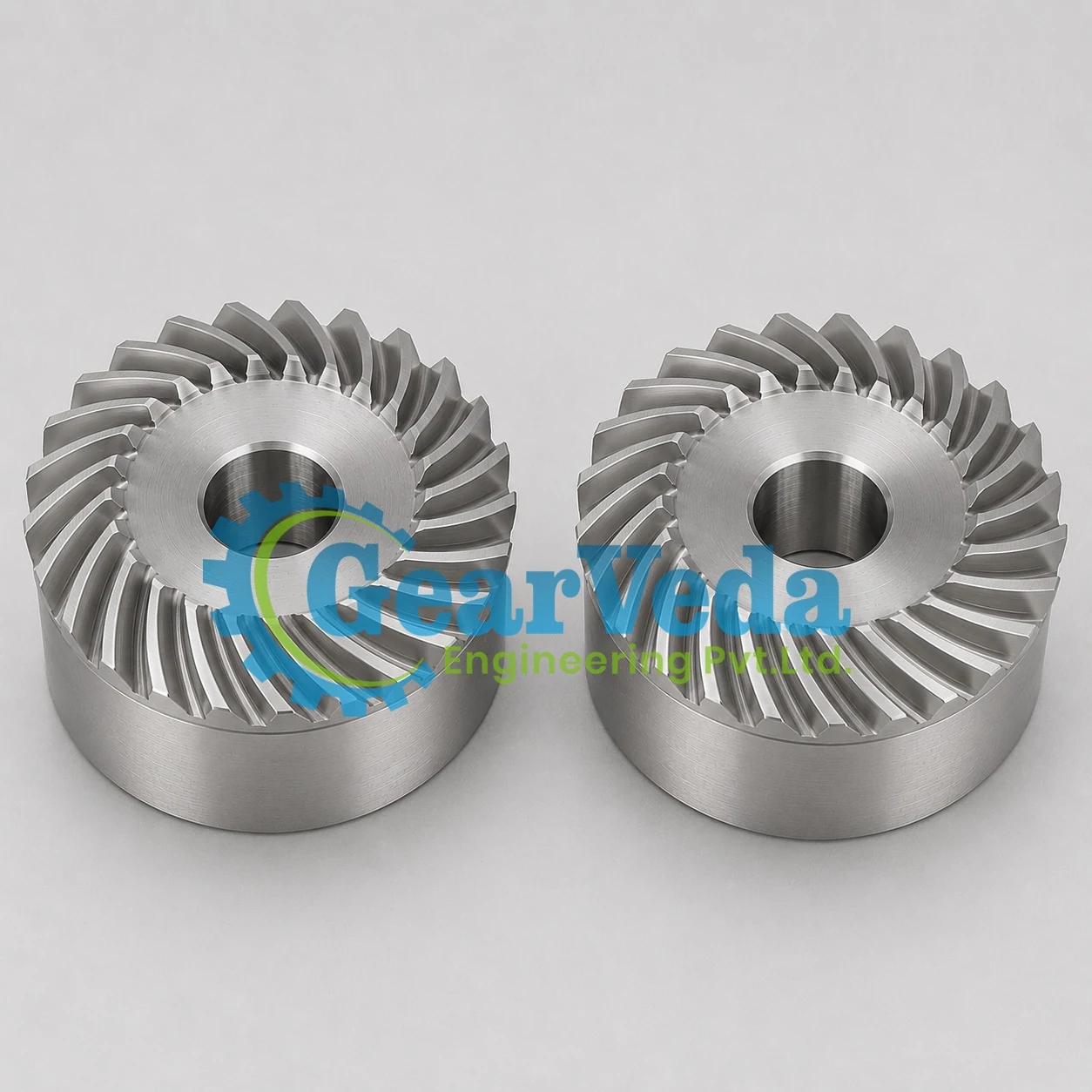
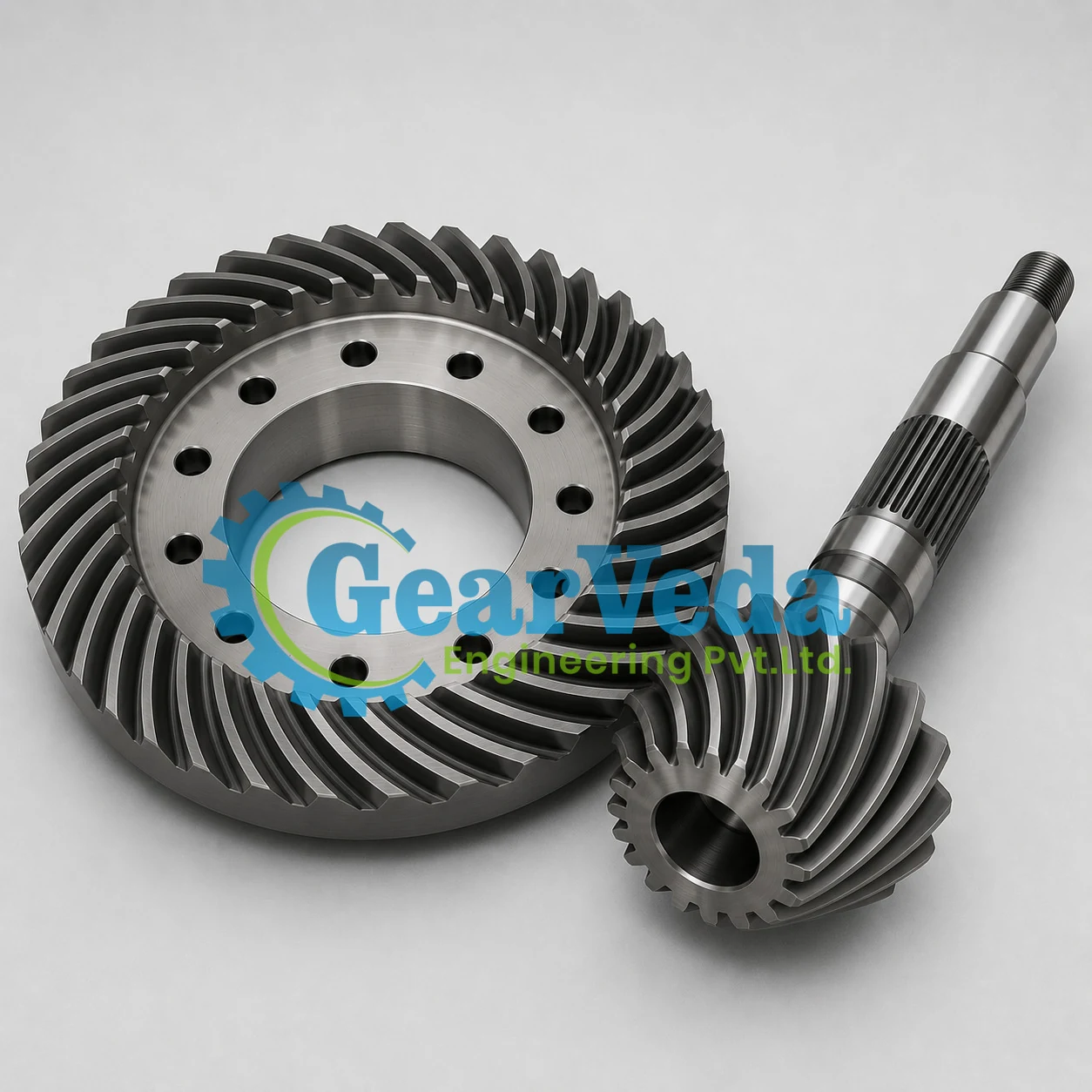
The spiral teeth are cut on a gear-cutting machine. The pinion and gear are cut as a pair, with the cutter data set to give the intended contact pattern.
5. Heat Treatment
Most sets are carburised and hardened, then tempered. The surface becomes very hard and the core remains tough. Because heat treatment distorts the gear slightly, finishing allowances are left.
6. Finishing
The hardened pair is lapped together, or the teeth are ground, to correct distortion and give the final contact pattern.
7. Inspection
Dimensions and hardness are checked, and the set is rolled together on a test bench and the contact pattern is checked with marking compound. The set is marked so that the gear and pinion stay together.